
Translation note: This English version follows the structure, data, figures, and references of the corresponding Chinese post. It was reviewed and synchronized on 2026-08-03.
Written on 2026-03-30, 7:53 PM - 9:40 PM
Preface
In the first article, I covered the software ecosystem. In the AI era, models are no longer just tools; they are infrastructure. This piece is not just an introduction to models, but a question about how to build your own capability stack in a world controlled by different companies and different countries.
The Current Model Landscape
The third-party benchmarking site Artificial Analysis shows a useful vendor ranking:
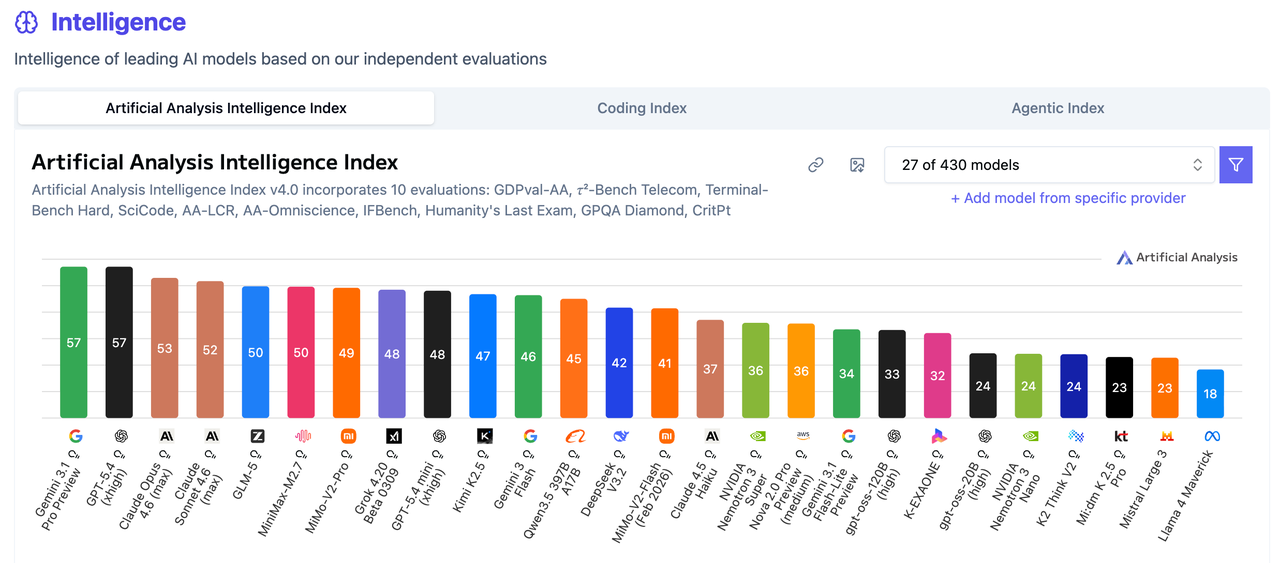
The competition is no longer just about raw capability. It is becoming a battle over infrastructure control:
- US frontier labs define the upper limit
- Chinese models compete by balancing quality and cost
- Other companies extend the ecosystem through clouds, GPUs, or social platforms
The current landscape can be summarized as follows:
| Rank | Model | Company | Country | Camp |
|---|---|---|---|---|
| 1 | Gemini 3 Pro | 🇺🇸 United States | Big Tech | |
| 2 | GPT-5 (High) | OpenAI | 🇺🇸 United States | Frontier Lab |
| 3 | Claude Opus 4.6 | Anthropic | 🇺🇸 United States | Frontier Lab |
| 4 | Claude Sonnet 4.6 | Anthropic | 🇺🇸 United States | Frontier Lab |
| 5 | GLM-5 | Zhipu AI | 🇨🇳 China | AI startup |
| 6 | MiniMax M2.7 | MiniMax | 🇨🇳 China | Startup |
| 7 | MiMo-V2-Pro | Xiaomi AI | 🇨🇳 China | Big Tech |
| 8 | Grok 4.2 | xAI | 🇺🇸 United States | Elon ecosystem |
| 9 | GPT-5 mini | OpenAI | 🇺🇸 United States | Frontier Lab |
| 10 | Kimi K2.5 | Moonshot AI | 🇨🇳 China | Startup |
| 11 | Gemini 3 Flash | 🇺🇸 United States | Big Tech | |
| 12 | Qwen 3.5 397B | Alibaba | 🇨🇳 China | Big Tech |
| 13 | DeepSeek V3 | DeepSeek | 🇨🇳 China | Startup |
| 14 | MiMo-V2 Flash | Xiaomi | 🇨🇳 China | Big Tech |
| 15 | Claude Haiku 4.5 | Anthropic | 🇺🇸 United States | Frontier Lab |
| 16 | NVIDIA Nemotron | NVIDIA | 🇺🇸 United States | Big Tech |
| 17 | Amazon Nova | AWS | 🇺🇸 United States | Big Tech |
| 18 | Gemini Flash Lite | 🇺🇸 United States | Big Tech | |
| 19 | gpt-oss-120B | OpenAI / open-source ecosystem | 🇺🇸 United States | Open-ish |
| 20 | K-EXAONE | LG AI | 🇰🇷 South Korea | Enterprise AI |
| 21 | gpt-oss-20B | OpenAI | 🇺🇸 United States | Open-ish |
| 22 | NVIDIA Nemotron Nano | NVIDIA | 🇺🇸 United States | Big Tech |
| 23 | K2 Think V2 | Kuaishou | 🇨🇳 China | Big Tech |
| 24 | MiniMax K2.5 Pro | MiniMax | 🇨🇳 China | Startup |
| 25 | Mistral Large 3 | Mistral | 🇫🇷 France | Independent Europe |
| 26 | Llama 4 Maverick | Meta | 🇺🇸 United States | Big Tech |
First tier
The first tier is dominated by the major US players:
- Google Gemini
- Anthropic Claude
- OpenAI ChatGPT
Their defining characteristic is the pursuit of maximum intelligence and the ability to set the upper limit of model capability.
Second tier
Chinese companies focus more on “good enough + much cheaper”:
- DeepSeek
- Qwen
- Kimi
- MiniMax
- GLM
Their defining characteristic is using cost advantages to capture the market quickly.
Other players
- xAI (Grok)
- NVIDIA (Nemotron)
- Amazon (Nova)
- Meta (Llama)
Their defining characteristic is binding users through cloud services, GPUs, or social entry points.
Coding Ability
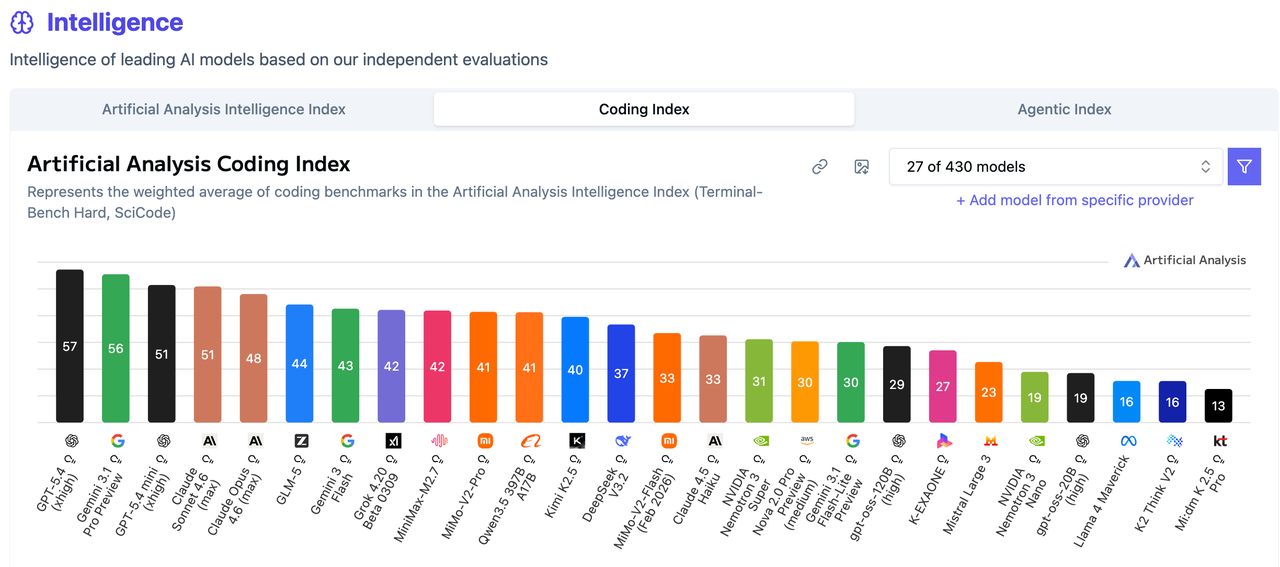
Coding benchmarks show the same overall trend: US models still lead, while Chinese models remain highly competitive.
In real-world coding, Claude is still widely regarded as one of the strongest everyday experiences.
Subscription Models
AI models are powered by tokens, which are basically the electricity of the AI world.
API usage
Pay-as-you-go is like connecting a power line and paying for what you consume. Every major vendor supports this model.
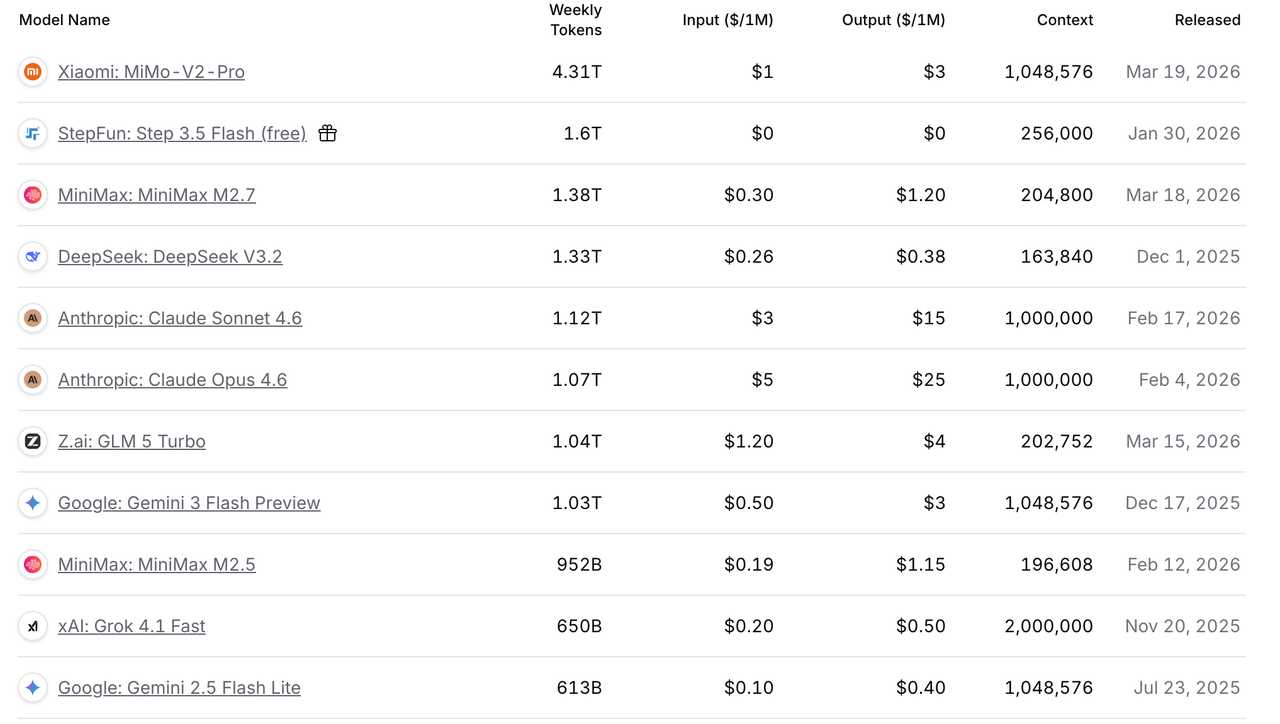
OpenRouter’s weekly token-consumption ranking shows the input and output prices and usage of popular models. It is a useful reference for model popularity, although exact pricing should be checked on each vendor’s official platform.
Subscription plans
Gemini, Claude, and ChatGPT all offer subscription products. The mainstream plans are around $20/month and include web access plus AI coding quota. For example, ChatGPT Plus includes Codex usage quota with five-hour and weekly limits; Claude provides Claude Code quota; and Google provides Antigravity quota.
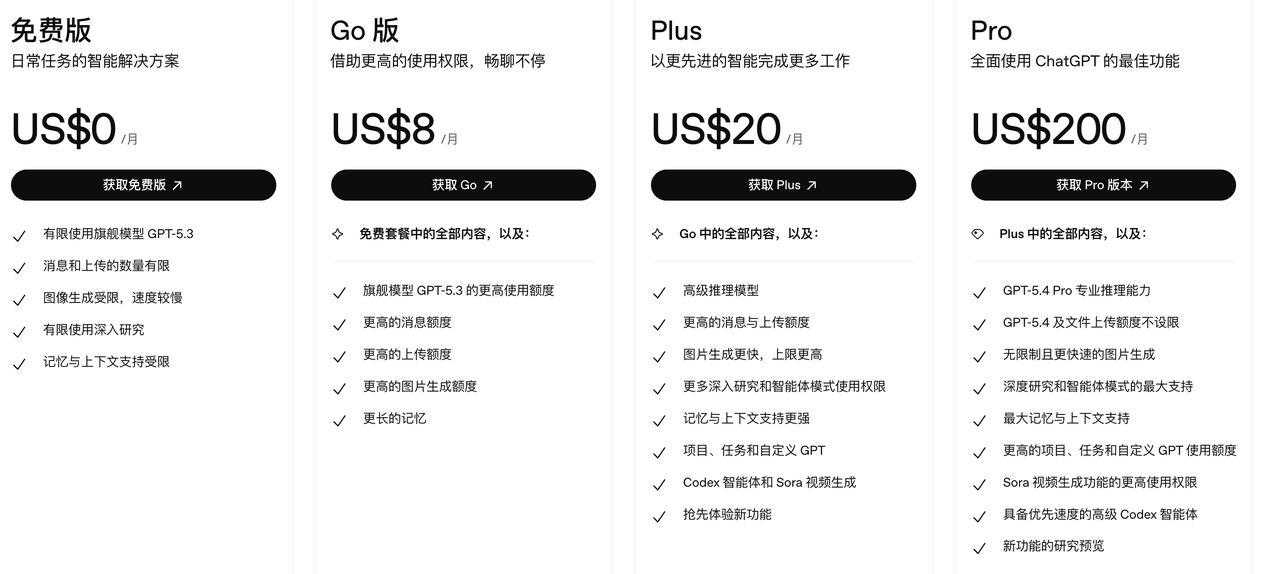
Official pricing pages:
Coding plans
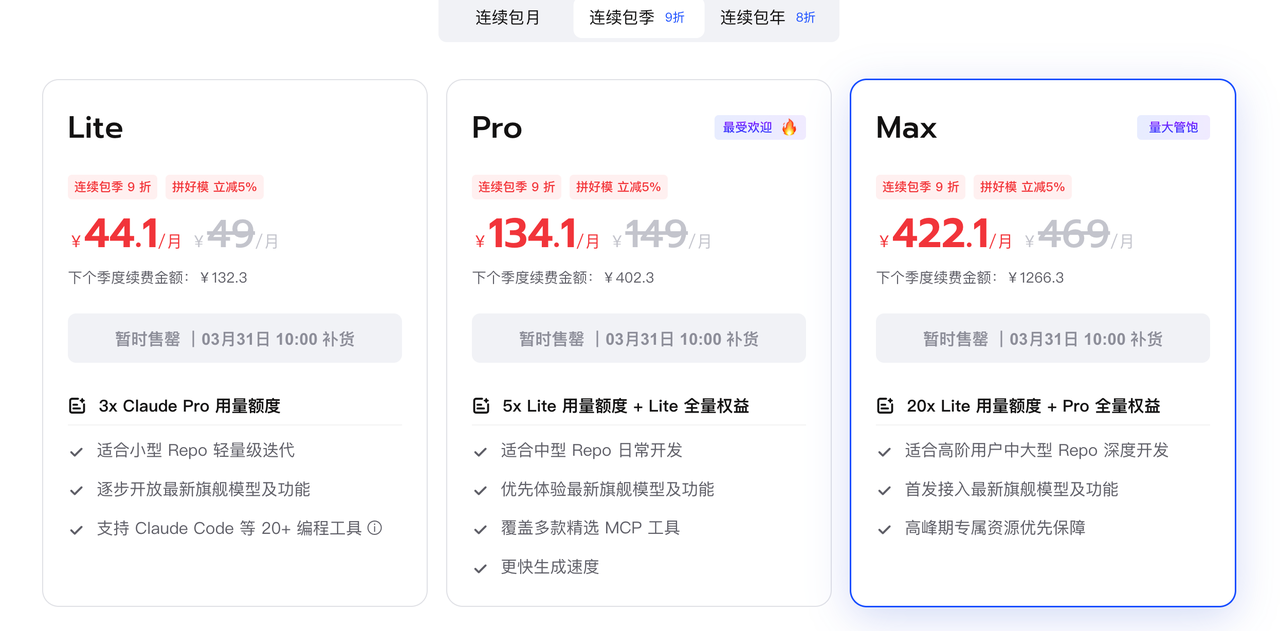
As token burn increased—especially after OpenClaw became popular—domestic vendors introduced package-style coding plans. This reflects AI moving from “usage-based billing” to a more infrastructure-like model. Like electricity moving from per-use billing to a monthly plan, developers can continuously call AI within a more predictable cost range.
Coding plans are therefore one of the best choices for controlling development cost. Readers who want to buy a MiniMax or GLM coding plan can use the invitation links below for a discount:
Relays and intermediaries
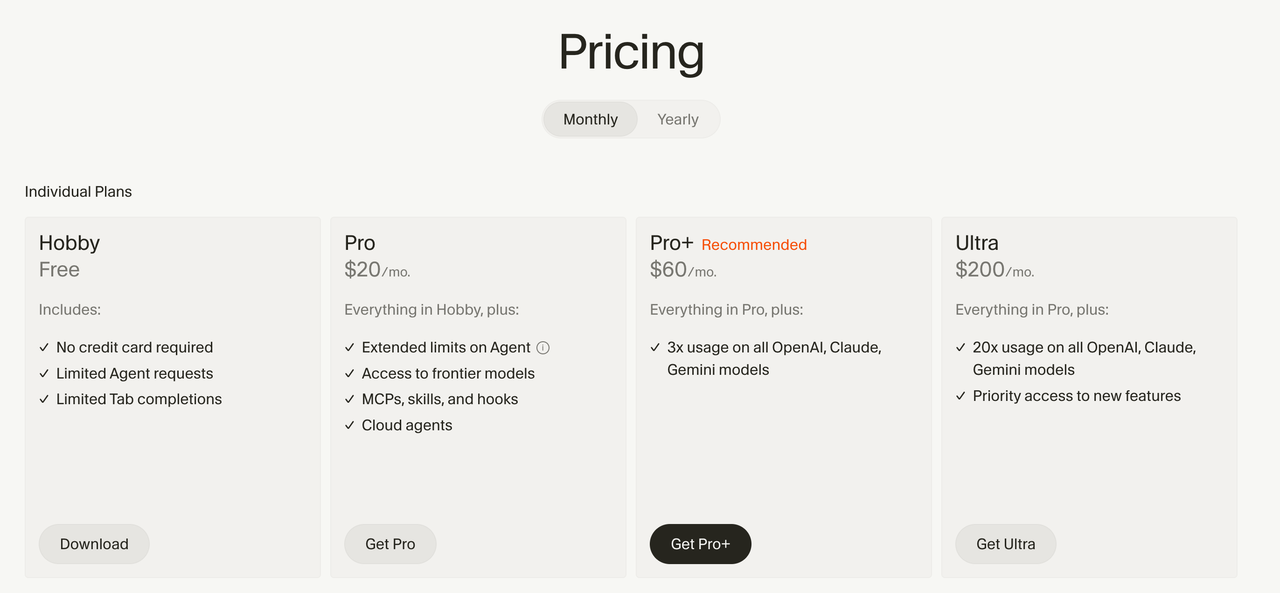
Because of US export-control rules and regional availability issues, users in mainland China, Hong Kong, and Macao may not be able to subscribe directly to the major US vendors. They sometimes rely on reputable intermediaries or aggregators such as OpenRouter or Cursor.
This can work in the short term, but regulatory changes make its long-term stability and sustainability uncertain. Architectures should avoid depending on one region or one vendor. Since March 2026, API restrictions have also become stricter, so it is safer to keep several geographically diverse AI suppliers available.
Other suppliers
There are also individual third-party suppliers that obtain compute through reverse proxies or other grey-market methods. Readers should assess them carefully and balance cost control against privacy risk.
Non-official suppliers and providers without a strong reputation may resell everything they receive. Treat information security as a first-class concern.
Conclusion
The core job of a developer is changing:
- understand model capability
- control cost structure
- design a sustainable model stack
In the AI era, the competitive advantage does not come from a single model. It comes from how you combine and use them.