
Hackathon (Hackthon) is a portmanteau combining hacker and marathon.
Originally, it was a competition where skilled programmers gathered together to complete a real programming project from scratch in roughly 24–48 hours, followed by a final evaluation.
Today, as AI has significantly lowered the barrier to making software, more people have entered the software development industry. Hackathons have also become increasingly common in China, and their meaning has changed accordingly.
By the Old school definition of a hackathon, the project must be developed from 0 to 1, and the process often involves staying up late or working through the night.
PS: Once you enter a flow state, you really should not interrupt it lightly, because the rhythm can easily break. At the same time, a fondness for staying up late is also a problem among programmers who are “well-paid, have little work, and die young” (reportedly the best profession for finding a spouse).
Hackathons in China today look more like a “showcase” — glamorous venues, high-resolution DSLR photography, and various sponsors’ resources gathered together. At the final competition, investors and corporate executives recruit through Boss Zhipin.
Of course, neither has an inherent advantage over the other. The former is more “Old School”, more “under ground”, and more “Real”. The latter can bring greater commercial exposure and more peer resources.
Offline Hackathon Experience
I signed up for a hackathon held in Hong Kong at the beginning of March. At the time, I mainly wanted to see what other people were working on.
When I first registered, I carefully evaluated my own project. Most of it had already been completed before the competition, so I was somewhat uneasy about whether I was qualified to enter.
Still, I followed the rules and submitted my project Demo on the organizer’s official website.
As far as I remember, the competition format was roughly: online registration -> preliminary Demo submission -> offline coding in the second round -> second-round presentation.
It lasted two days. The first day included the opening, speeches by the judges, and coding. The second day included coding and presentations.
In practice, the atmosphere did not feel like an especially tense marathon. There was no strict requirement to stay at the venue either. After being cooped up in the room for a long time, I instead felt that the carbon dioxide level was getting high and became sleepy.
I returned to Shenzhen that evening and attended the presentations the next day.
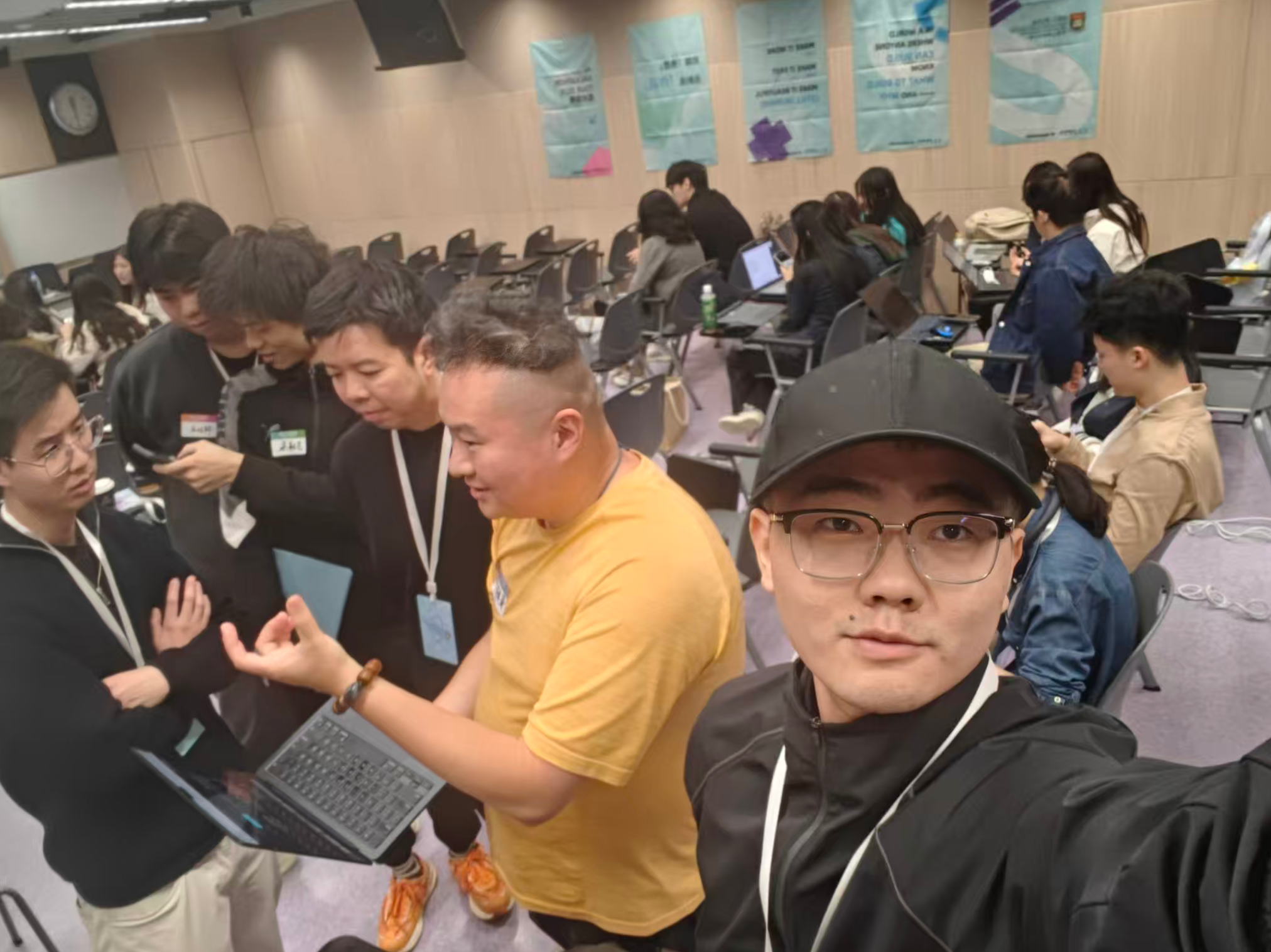
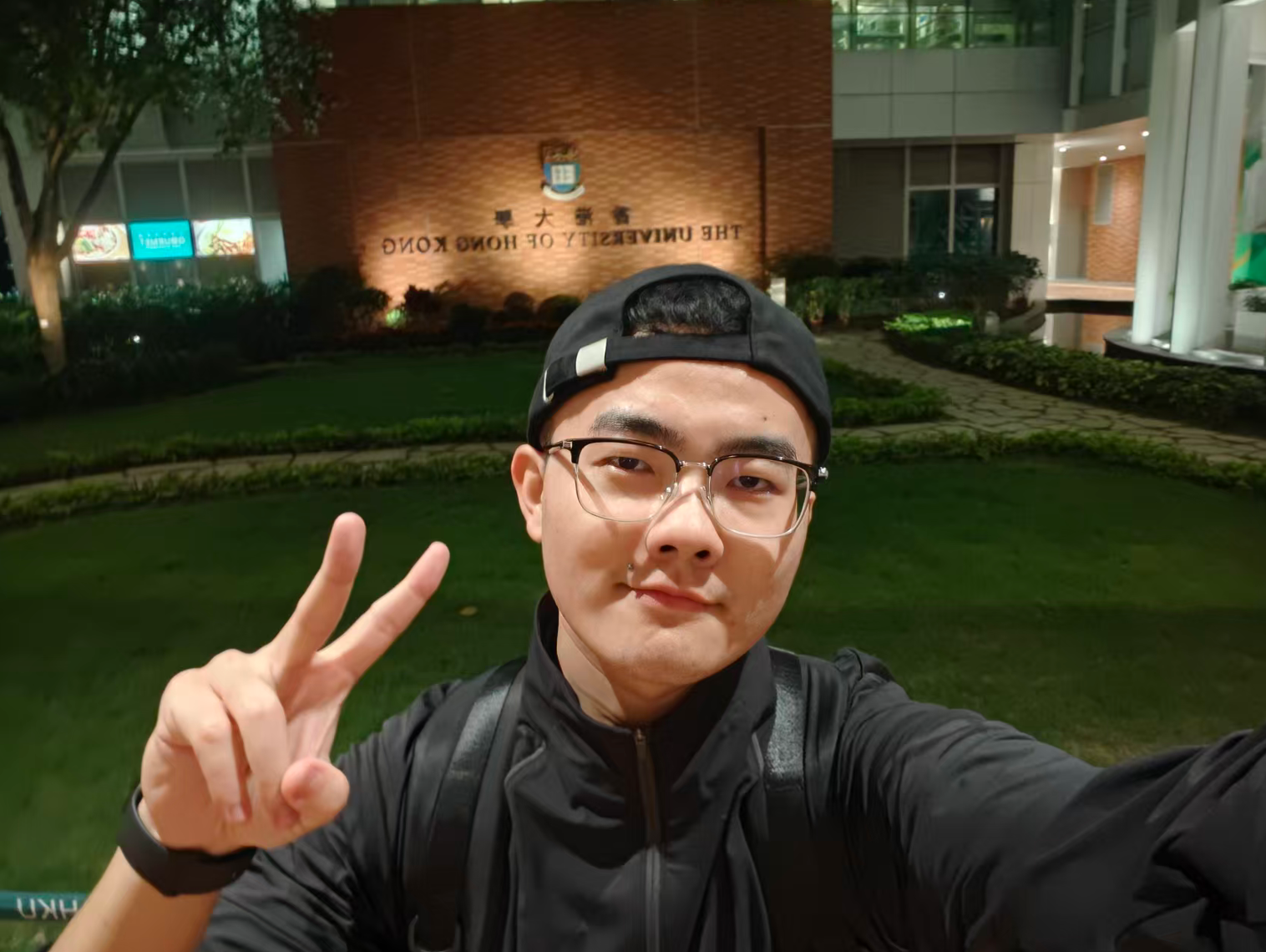
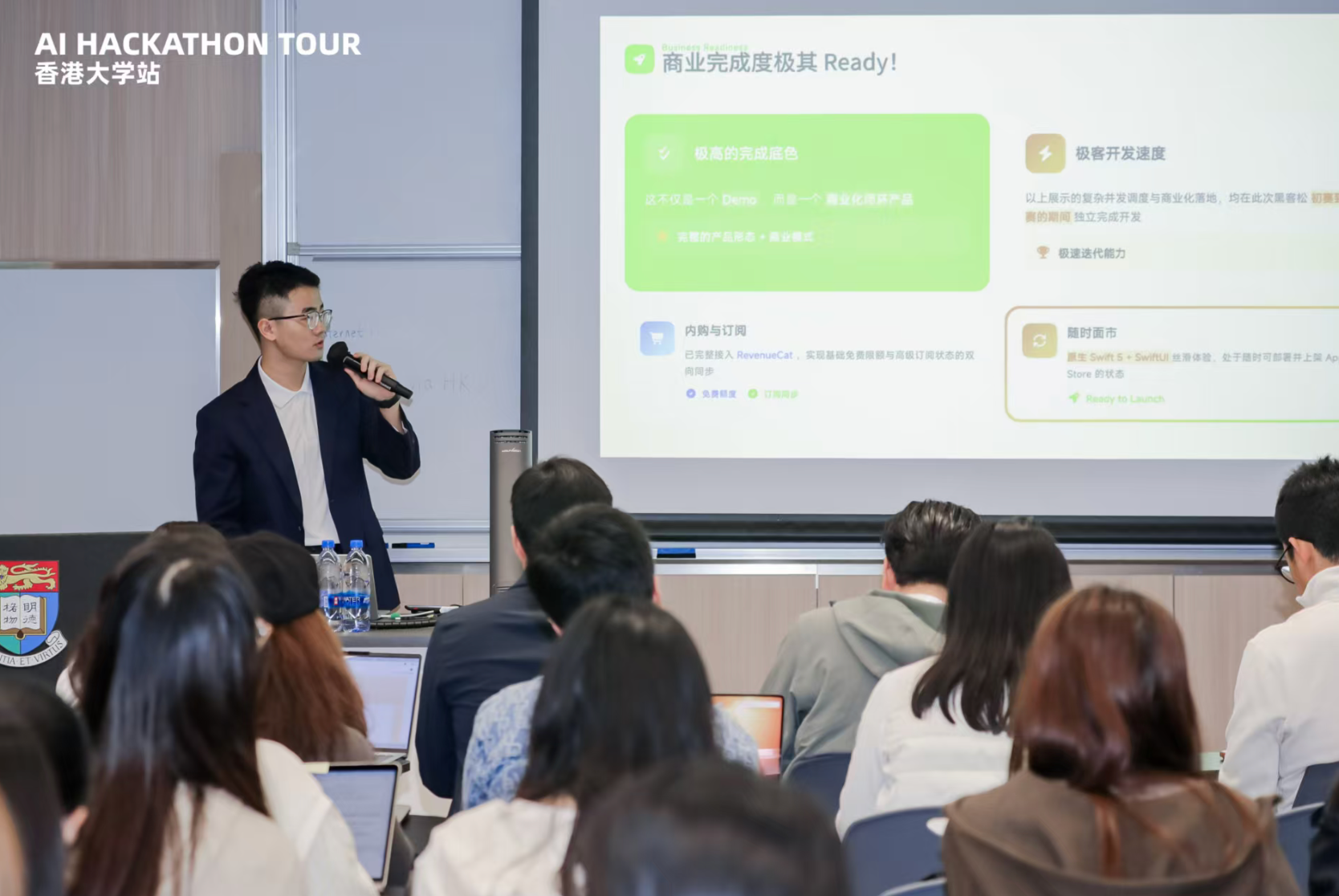
Some photos from the offline competition: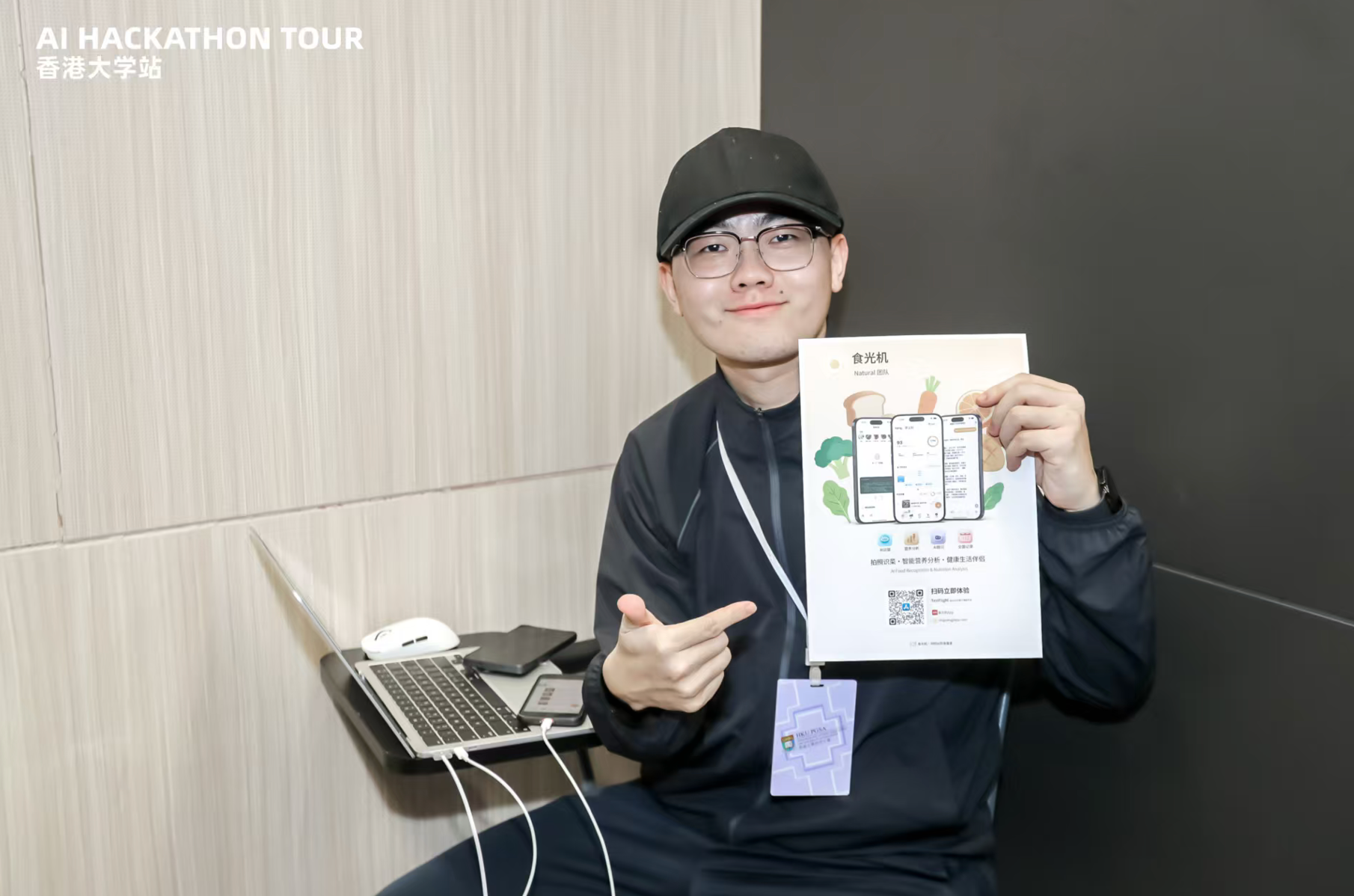
Follow-up and Launch
At that time, the basic functions of the app were complete and it had already been packaged for TestFlight, though it had not yet passed App Store review.
After I demonstrated one recognition on site, the project received the highest number of votes in the group and across the whole event during the audience voting that followed.
Within two months after the presentation, I completed the website development and launched the app on the Apple App Store.
About Hackathons
If I separate out what I truly gained from this hackathon, it was probably:
- Learning how to present my project to the public. It was rushed, and even the PPT was generated with Kimi, but presentation was still a key part of promotion.
- Meeting peers and seniors who were equally enthusiastic about AI
- Learning more about the complexity of the real world
After reading some online articles later, I learned that most hackathons today actually involve entering with an existing product. Some manufacturers even hire contestants to release and introduce their products for promotional purposes. In that sense, they are quite different from Old School hackathons.
Times change, and so does the value between technology and media, development and marketing. Perhaps that is not necessarily a bad thing.