
It has been more than a year since I uploaded my first blog post.
Over the past year, continually using various AI tools has given me a firsthand sense of what “changing with each passing day” really means.
Take the process of updating a blog post as an example.
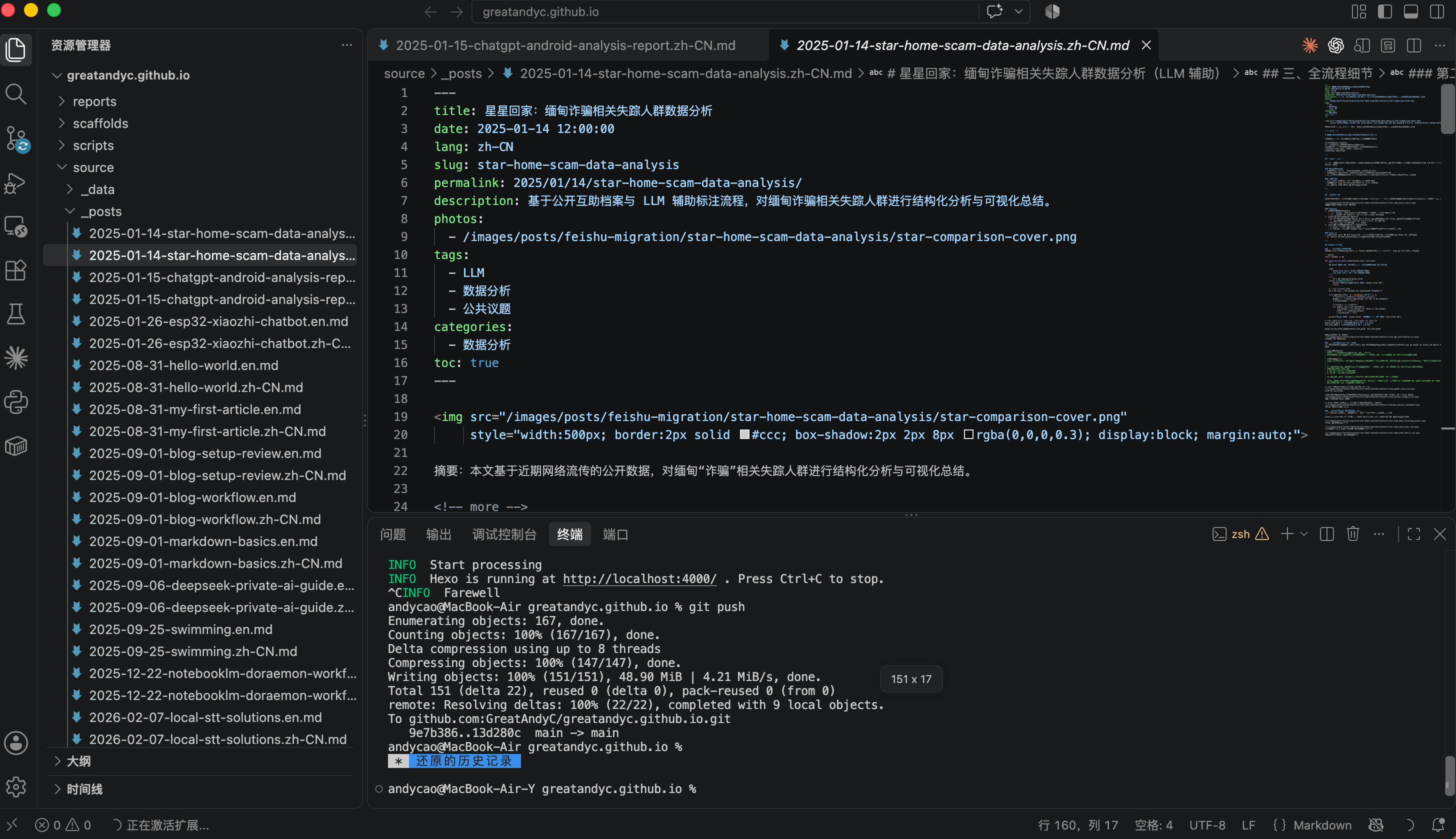
At the beginning, I had to create a new Markdown file in the project myself, link the images in code, and then run Hexo’s deployment and rendering commands before I could publish the article to the server.
At that point, the data flow was rough and primitive:
my brain → project code → server
Later, I learned about CMSs (Content Management Systems).
With CodeX’s help, I added a content-management page to my blog and even went so far as to add skins for different universities.
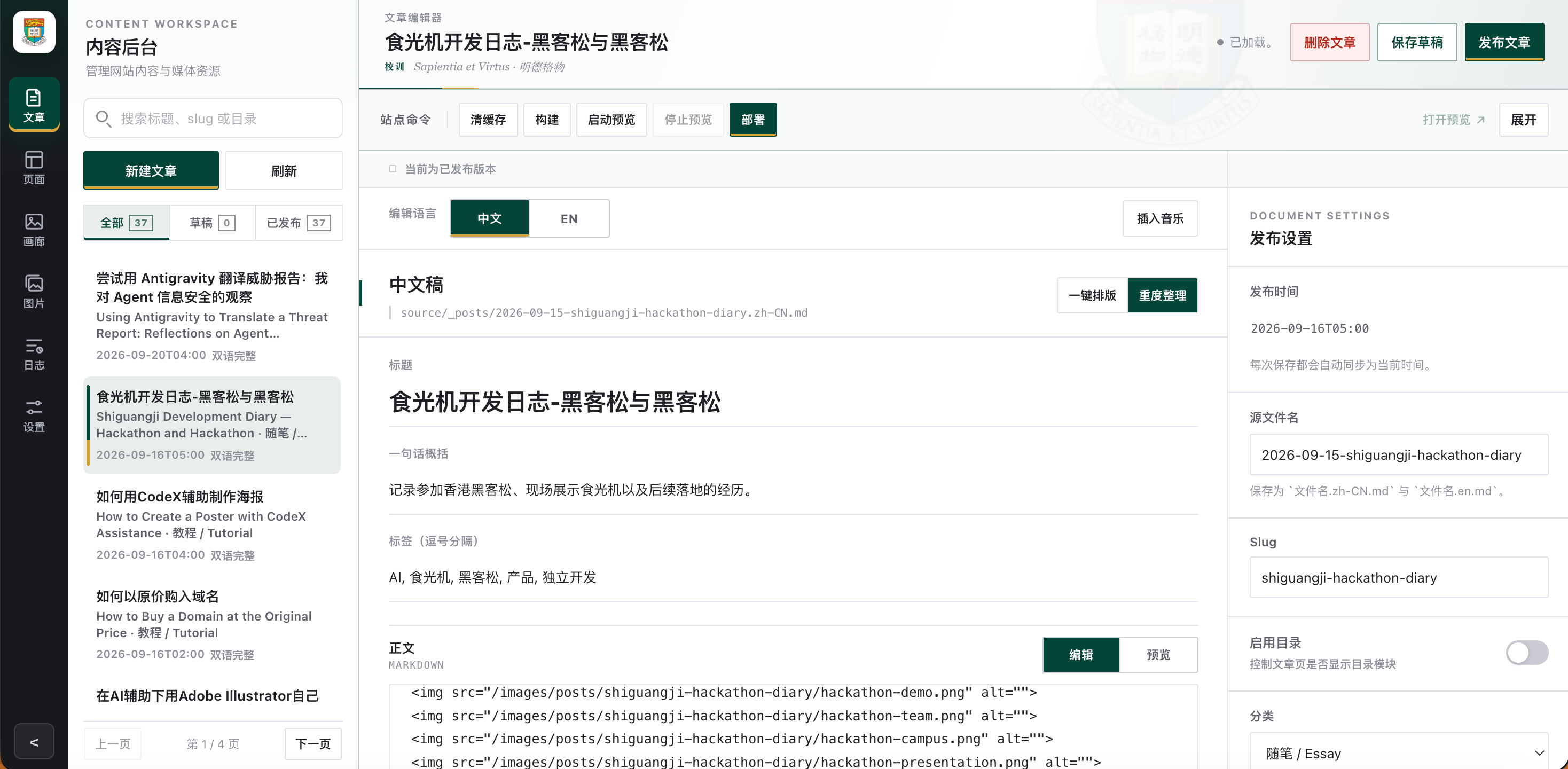

I also connected a DeepSeek API, which could help me translate content directly into English.
The data flow then became:
my brain → CMS frontend → project code → server
But now my way of providing input has been simplified once again.
After editing an article in Obsidian, I can simply ask CodeX to read it, translate it, and merge it into the codebase. One sentence is enough to complete the process.

The data flow is now:
my brain → Obsidian → CodeX → project code → server
To me, this process feels like a series of layers of abstraction. I have moved from touching the raw code directly, to wrapping it in a frontend page, and now to skipping the frontend altogether while an agent enters the raw content for me.
Each of the three methods has its own advantages:
- The first method lets me interact with the details of the code, like opening an electrical box and operating it from inside.
- The second is more Web 2.0: frontend and backend are separated, and the mode of human-computer activity is more pleasant.
- The third feels like having a servant. I no longer need to care about execution; I only need to pass the request to someone else.
In my view, an Agent/Harness is like an operating system for a large language model. It constrains the model so that its intelligence can be applied in the right direction. I wonder what it will become in the future.
It is rather strange that this website, with its Web 1.0 visual style, uses the most advanced large-model technology to discuss content from different eras—swallowing everything whole without fully digesting it.