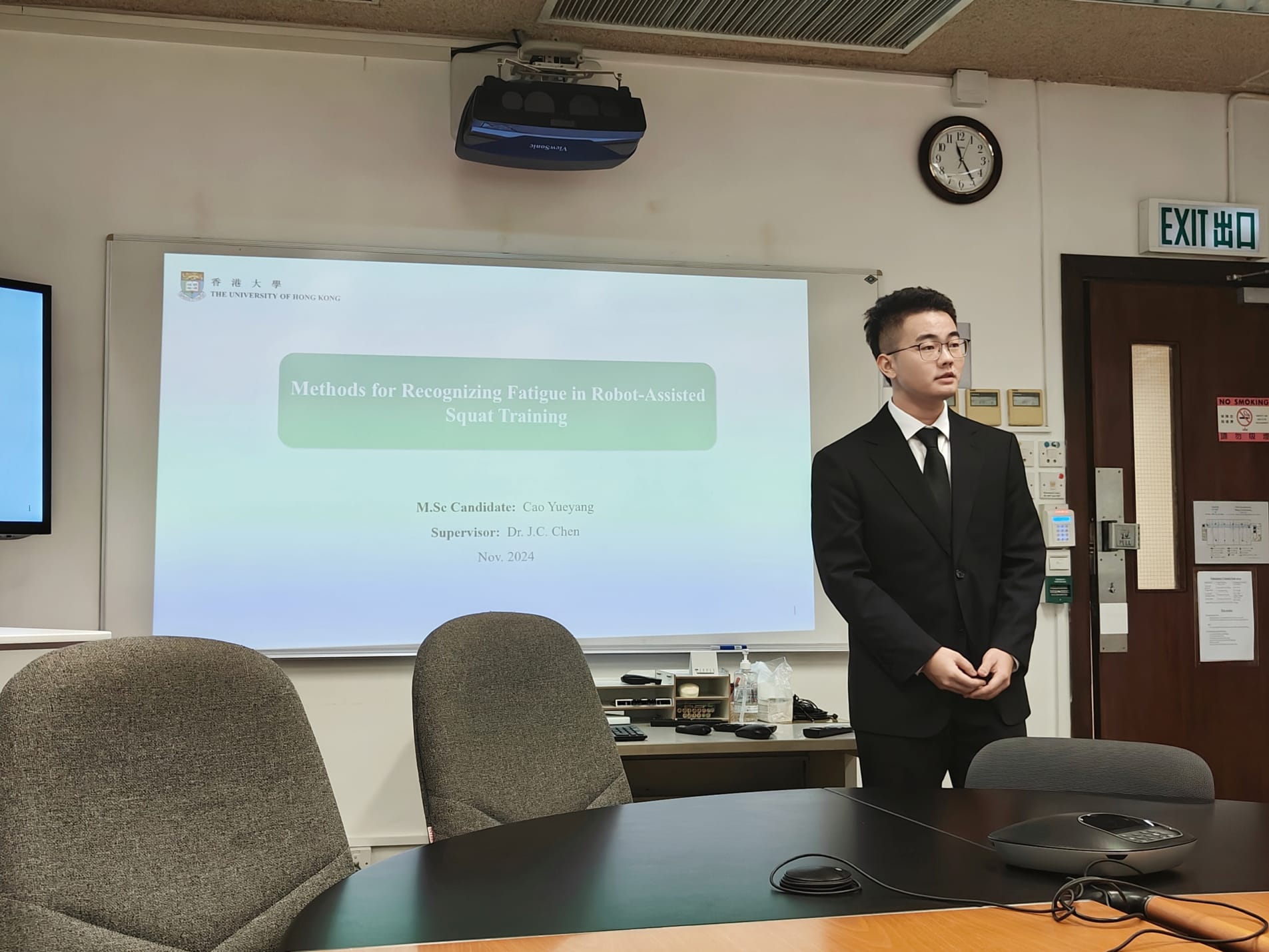
While studying in Hong Kong, I do not know whether it was excessive stress or an air-conditioning unit that was too loud, but my sleep was affected. On top of that, I drank a cup of milk tea after every meal during my internship, and my weight climbed above 82 kg.
After the internship ended, all the data for my thesis had been collected. I was reading papers, writing the thesis, and preparing for my defense at the same time.
At that point, I felt that I absolutely could not go into the defense in that condition.
On the one hand, since my thesis was about fitness, I felt that I should at least produce some results as the author of the thesis. On the other hand, this might be the last time in my life that I would be studying at a school. I wanted the person in the photos to look at least somewhat healthy, so that years later I would remember myself as spirited rather than in terrible physical condition.
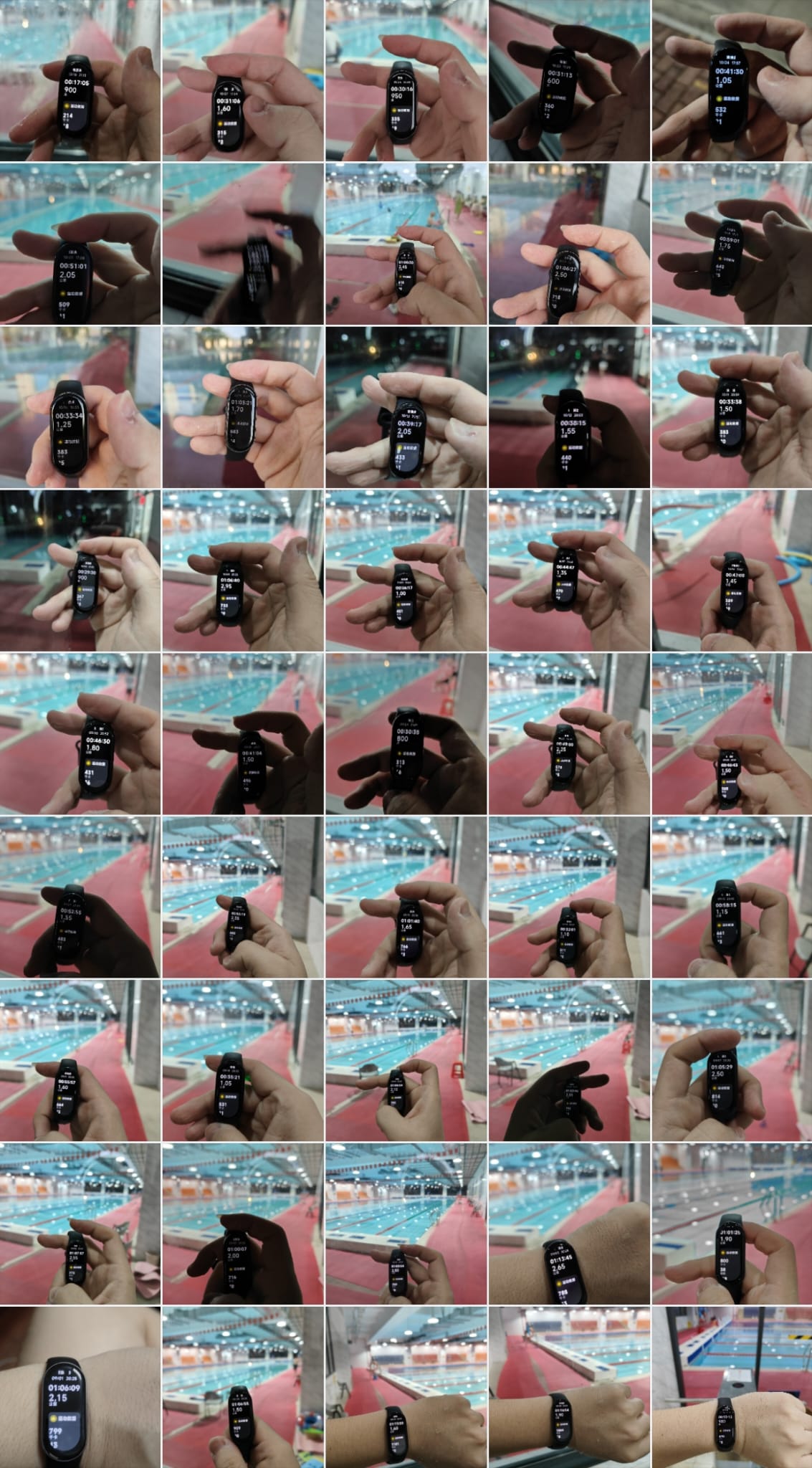
So I started controlling my diet while swimming and working out. Every day, I traveled between home, the gym, the swimming pool, and the library.
You can find the record of my swimming-related article here.


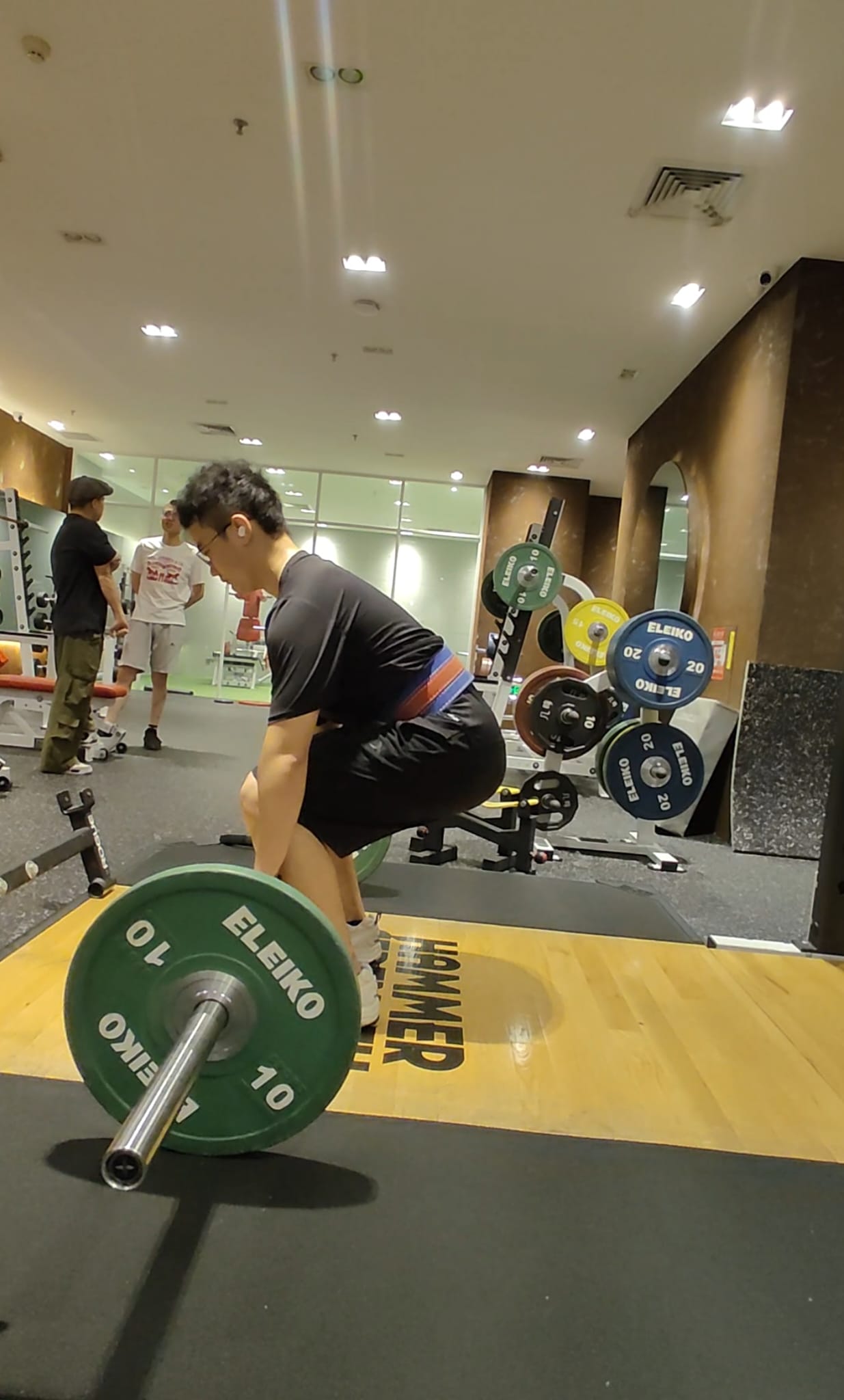
Of course, I think the most important part is diet control.
Metabolic calculations
Resting metabolic rate (RMR)
The Mifflin–St Jeor equation can be used to calculate resting metabolic rate—the calories your body burns just by being alive and breathing.
For men:
$$
RMR=10W+6.25H-5A+5
$$
For women:
$$
RMR=10W+6.25H-5A-161
$$
RMR stands for Resting Metabolic Rate.
Here, W is measured in kilograms, H in centimeters, and A is age.
For example, the RMR of an 80 kg, 177 cm, 25-year-old man is:
$$
10\times80+6.25\times177-5\times25+5=1786.25\ \mathrm{kcal}
$$
Note: kcal is a unit of energy, or kilocalorie. Converted to the international unit joule:
$$
1\ \mathrm{kcal}=4.184\ \mathrm{kJ}
$$
In other words, this man would burn about that many calories per day simply by staying alive and breathing. Of course, the equation is not precise; it is only a rough estimate.
Total daily energy expenditure (TDEE)
TDEE stands for Total Daily Energy Expenditure.
$$
\mathrm{TDEE}=\mathrm{RMR}+\text{daily activity}+\text{exercise}+\text{thermic effect of food}
$$
A simple conversion from RMR to TDEE can be expressed as:
$$
\mathrm{TDEE}=\mathrm{RMR}\times\text{Activity Factor}
$$
| Activity level | Factor |
|---|---|
| Sedentary, little to no exercise | 1.20 |
| Light activity, exercise 1–3 times per week | 1.375 |
| Moderate activity, exercise 3–5 times per week | 1.55 |
| High activity, exercise 6–7 times per week | 1.725 |
| Very high activity / physically demanding work | 1.90 |
For example, the 80 kg, 177 cm, 25-year-old man above has a moderate activity level:
$$
\mathrm{TDEE}=1770\times1.55=2744\ \mathrm{kcal/day}
$$
If you want to lose fat, your daily calorie intake must be lower than your TDEE.
If you want to gain weight, your daily calorie intake must be higher than your TDEE.
The macronutrients that provide energy include:
- Carbohydrates: $4\ \mathrm{kcal/g}$
- Fat: $9\ \mathrm{kcal/g}$
- Protein: $4\ \mathrm{kcal/g}$
For fat loss, the main target is body fat. Because human adipose tissue is not pure fat—it also contains water, cellular structures, and other components—a common estimate is:
$$
1\ \mathrm{kg}\ \text{of body fat}\approx7{,}700\ \mathrm{kcal}
$$
Therefore, if the daily calorie deficit—the TDEE minus calorie intake—is 500 kcal, it would take about 15.4 days to lose 1 kg of body fat.
At the same time, food intake is also affected by digestion, metabolic efficiency, and other factors, such as mood and hormones.
Making sure that you do not have metabolic problems, avoiding hormone medication, staying in a good mood, sleeping well, and drinking enough water are also very important.
Diet log
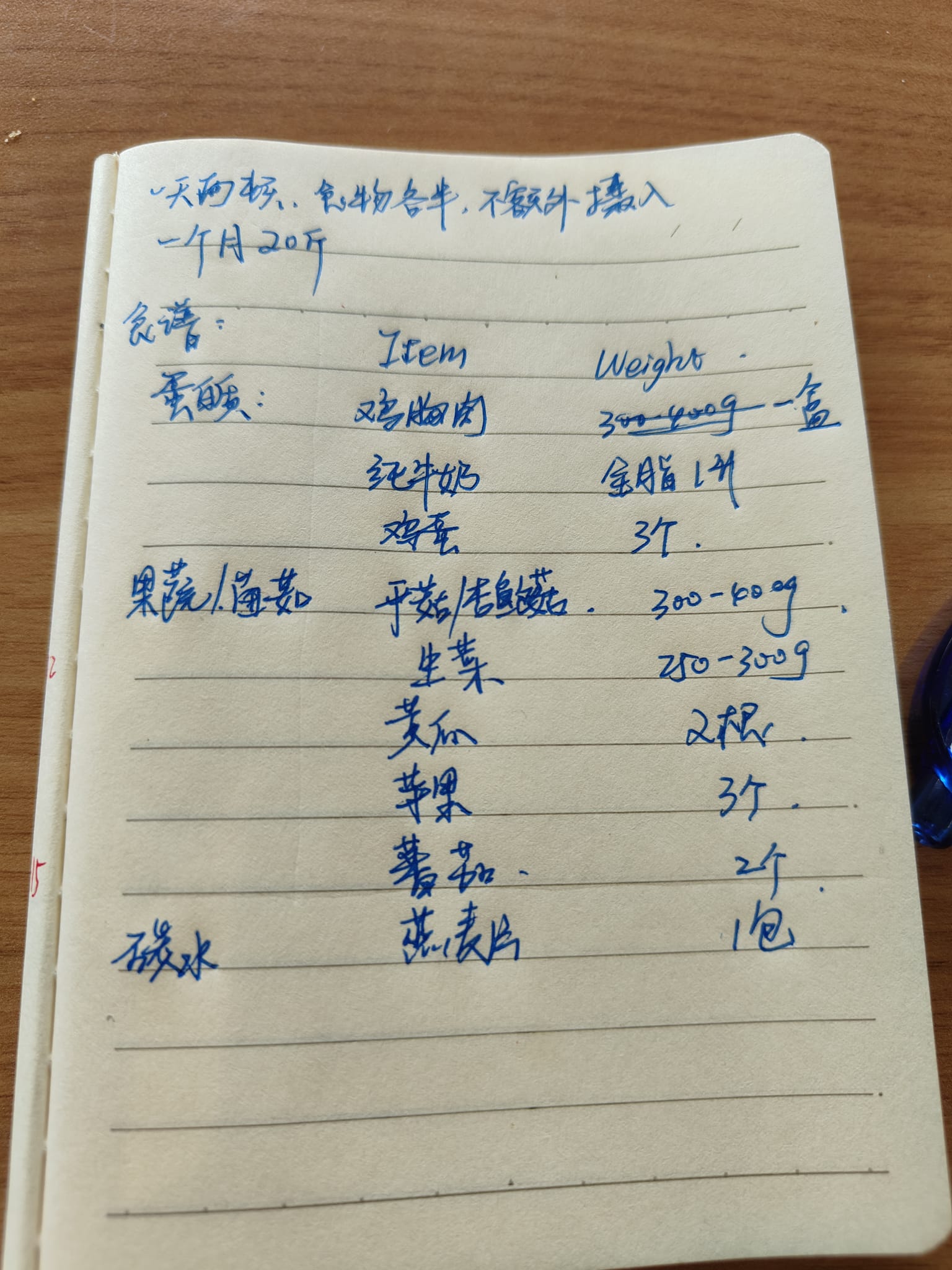
My original diet plan was based on a Zhihu blogger’s approach. The goal was convenience, clean eating, and sufficient simplicity.

As the image shows, the nutrients in the plan came from:
- Carbohydrates: apples, citrus, pears, oats, and tomatoes
- Fat: egg yolks and milk
- Protein: chicken breast, egg whites, and milk
- Dietary fiber: cucumbers, apples, pears, and tomatoes
- Vitamins: tomatoes
There were also various trace elements and amino acids. Since the ingredients were all whole foods and did not require additional cooking techniques, calculating the nutritional intake was fairly simple.
Written record
The Evolution of Psychology argues that although Homo sapiens have entered modern life, our genes are not very different from those of the hunter-gatherers of ancient times.
The diet of early humans may have alternated between feasting and fasting, without the need for a fixed eating routine, while still relying mainly on carbohydrates. I therefore tried an experiment on myself based on the daily intake described above: I prepared the food in advance, or each morning, and then finished eating all of it at different times throughout the day.
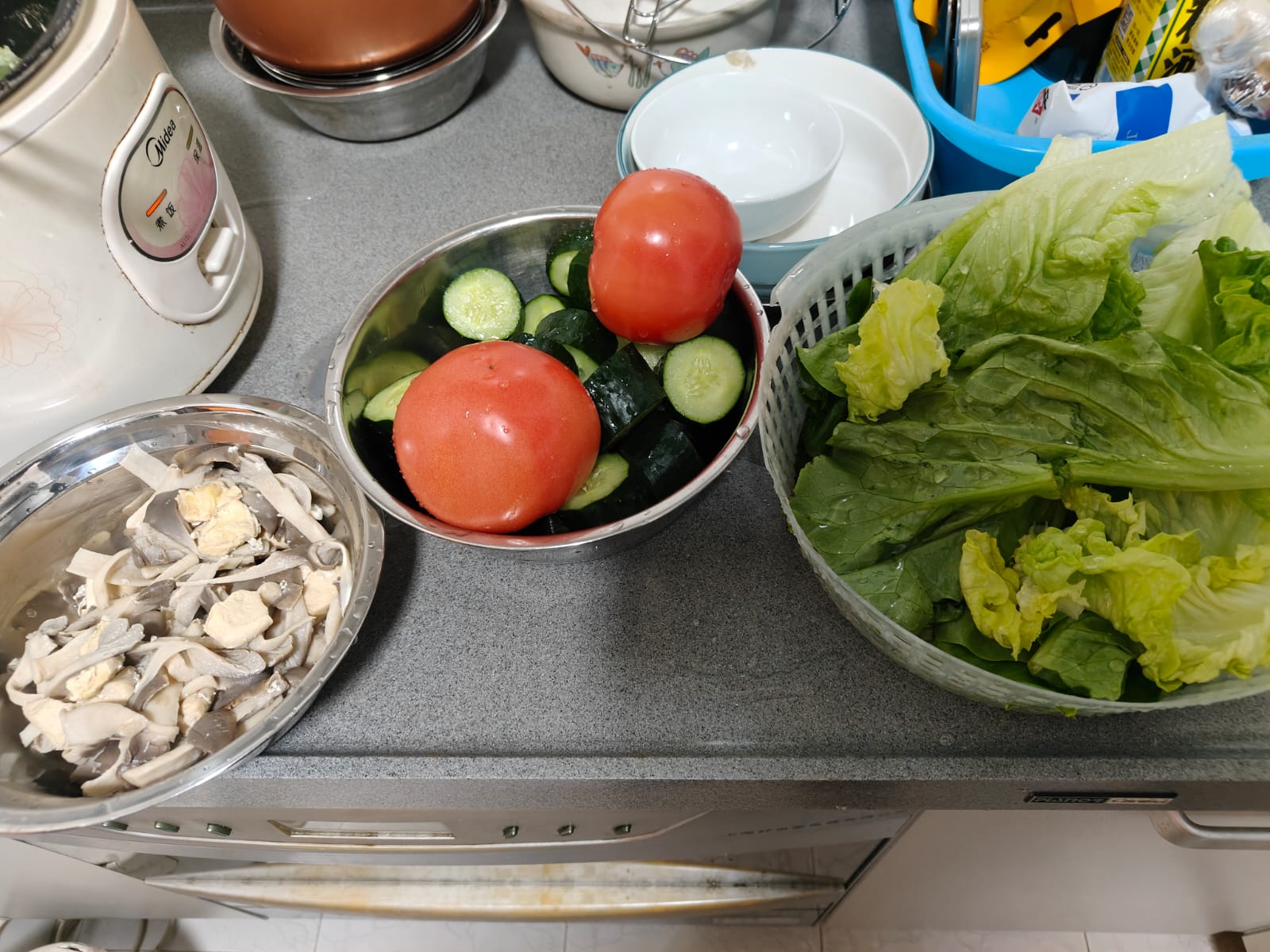
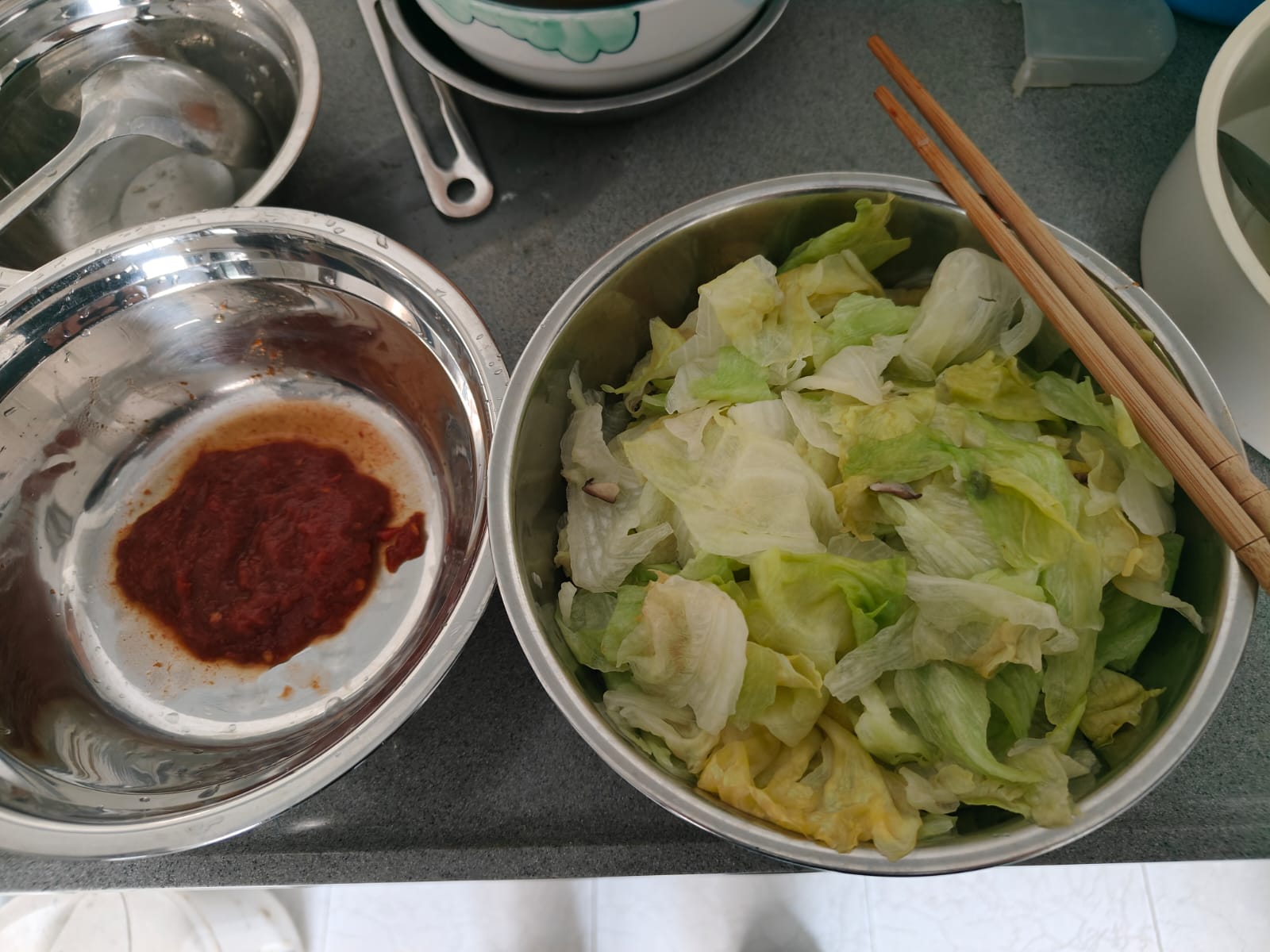

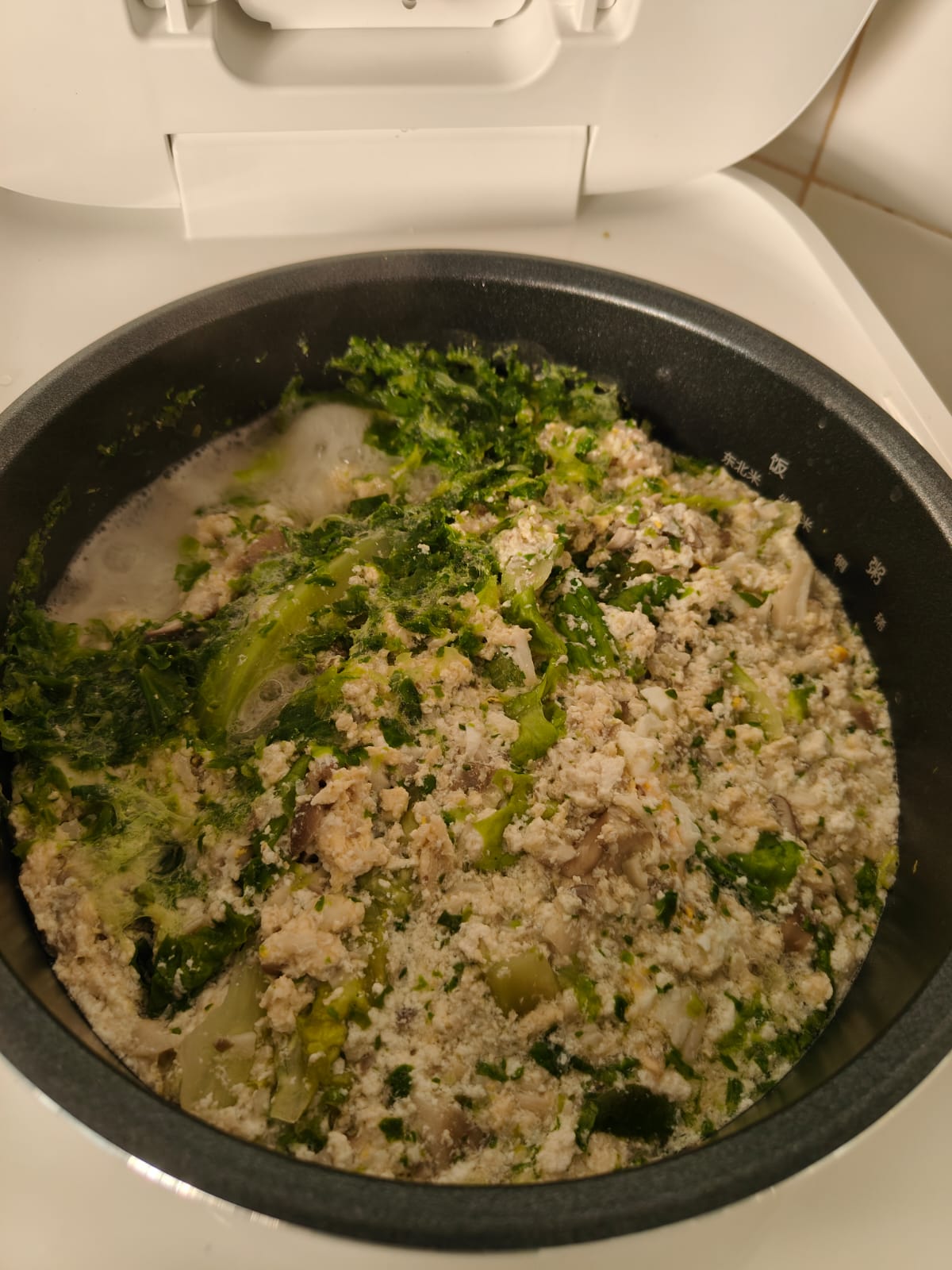
The relatively stable diet plan I eventually developed was:
- Prepare the ingredients in advance: cucumbers, apples, citrus, cubed chicken breast, washed lettuce, and eggs.
- Buy an enormous rice cooker. In the morning, put all the ingredients into it, add water and salt depending on my mood, and boil everything for an hour.
- After an hour of morning exercise, return home, drain the water, place the ingredients in a food-grade stainless-steel basin, portion them out, and finish them all in one day.
Apart from being unpleasant to eat, it was a fairly efficient diet plan.
Later, however, I felt that it was too inefficient and tasted too bad. My current plan is:
- Cook several kilograms of brown rice at once each week, portion it, and freeze it.
- Prepare chicken breast, chicken legs, chicken wings, and beef in an air fryer in one batch, then refrigerate them.
- When eating, put everything together and heat it in the microwave. The whole meal takes less than ten minutes.
Conclusion
I first encountered fitness during my undergraduate years. I went on to train systematically, read professional books on nutrition and kinesiology, watch professional fitness videos, train at the gym, and eventually explore street workout. It has been almost ten years, with intermittent periods of being lean, overweight, bulky, and muscular. Looking back on these different phases, I can be certain that my physical condition—the material foundation—has influenced my mental state, and vice versa, to a considerable extent.
In the preface of my master’s thesis, I quoted Mark Rippetoe, the author of Basic Barbell Training:
“Physical strength is the most important thing in life. Although its importance to daily life has declined throughout human history, its importance to life itself has never diminished… The strong body formed through millions of years of human evolution will not disappear simply because the desk was invented.”
I also wrote in my own preface:
“A strong body not only gives a person greater control over themselves and their environment on a physical level, but also makes them more confident psychologically. This is highly beneficial to a person’s growth and development.”
When I had just started studying at HKU, I felt that my mental and physical condition was at the lowest point of my life. I once felt that I had nothing left.
But I signed up for a one-on-one leg mobility competition at the university sports center, and I could still take first place on the leaderboard in random matches against people I had never met. In a Muay Thai class, I could still immediately learn material that was completely unfamiliar to me, and I was selected as a demonstration student to spar with the coach.
So I knew that even if I had forgotten or lost many kinds of knowledge and abilities, the muscles and cells in my body had never betrayed me. I could still win. I think that is the most important thing fitness has given me.
This article records some of my explorations and experiences with fitness and diet. I hope it can also help anyone who needs it.